A small bathroom can start feeling too tight long before it actually runs out of square footage. The problem is usually not just size. It is poor layout, weak storage, dated finishes, and everyday frustration packed into one of the hardest-working rooms in the house. That is exactly why a small bathroom remodel planning guide matters before any tile is ordered or demo begins.
When planning is done well, a compact bathroom can feel cleaner, brighter, more efficient, and much easier to live with. When planning is rushed, even a beautiful remodel can leave you with a door that swings into the vanity, drawers that do not fully open, or a shower that still feels cramped. Good remodeling starts with decisions on function first, then style.
Start a small bathroom remodel planning guide with daily use
The best place to begin is not Pinterest. It is your actual routine.
Think about who uses the bathroom, when traffic is highest, and what creates friction right now. In some homes, the issue is one sink and no storage for a busy family. In others, it is an aging tub that rarely gets used, poor lighting at the mirror, or finishes that are simply worn out. A guest bath has different priorities than a primary bathroom, and a hall bath serving kids needs more durable choices than a low-traffic powder room.
This is where clear goals save money. If your main objective is better function, budget should go toward layout improvements, storage, and long-term durability. If the bathroom works fine but looks dated, you may be able to keep plumbing locations in place and focus more on surfaces and fixtures. The right answer depends on the room and how you want it to perform for the next several years.
Layout choices matter more than square footage
In a small bathroom, inches count. A layout that works on paper can still feel awkward once cabinets, trim, and door swings are installed.
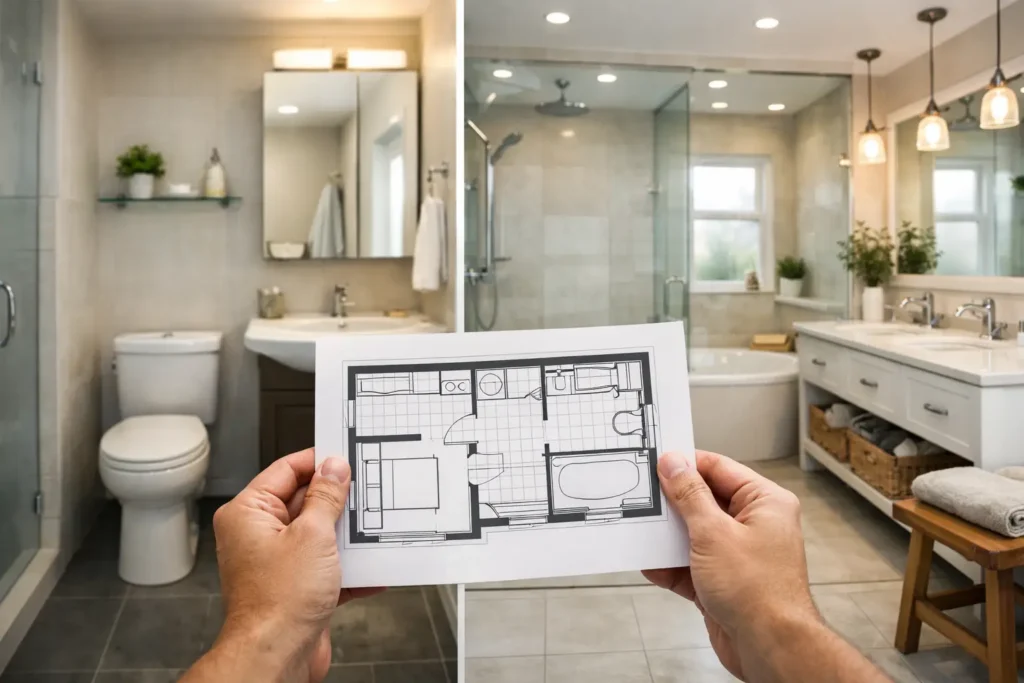
Before choosing materials, look closely at how the room flows. Does the door block the vanity? Does the toilet sit too close to the tub? Would a pocket door or outward swing create more usable space? Could a standard vanity be replaced with a shallower cabinet without losing function? These are the types of decisions that make a compact bathroom feel intentionally designed instead of squeezed together.
Many homeowners assume moving plumbing is always too expensive, but that is not always true. If relocating a shower valve, drain, or vanity line solves a major problem, the added cost can be worth it. On the other hand, if the current footprint works reasonably well, keeping plumbing in place usually helps control the budget. The trade-off comes down to whether the improvement changes daily comfort enough to justify the work.
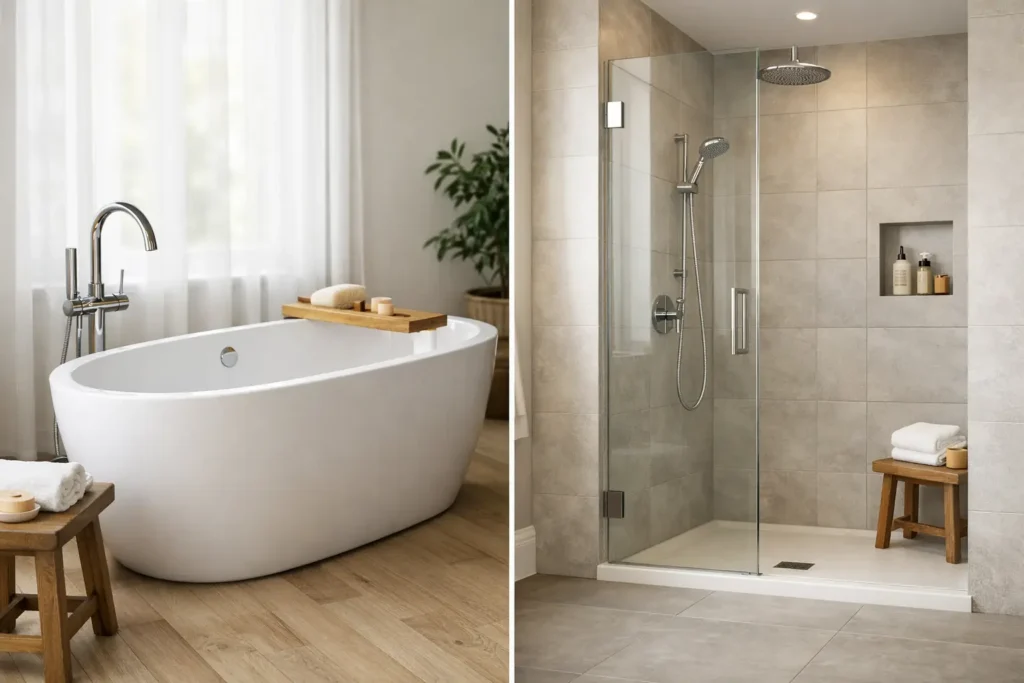
A walk-in shower is one of the most common upgrades in a small bathroom. It often makes the room feel more open than a bulky tub surround, especially when paired with clear glass and light-colored tile. Still, removing the only tub in the home is not always the best move for resale or family use. If you have young children or only one full bath, keeping a tub may be the smarter long-term choice.
Budget for the things you cannot easily change later
A smart small bathroom remodel planning guide puts permanent decisions ahead of decorative ones.
Tile, waterproofing, plumbing work, ventilation, and cabinetry have a bigger impact on performance than a mirror or paint color. If budget is tight, prioritize the parts of the remodel that affect durability and everyday use. Fixtures and accessories can often be upgraded later. Replacing failed waterproofing behind tile is a very different story.
It also helps to build a realistic contingency into the budget. Older homes in the Austin area can hide water damage, framing issues, outdated wiring, or previous repair work that needs correction once walls are opened. A little flexibility in the budget keeps those discoveries from stalling the project or forcing lower-quality finish decisions at the end.
Homeowners often ask where to spend and where to save. In a small bathroom, spend on good installation, quality waterproofing, solid cabinetry, and lighting that actually works. Save by simplifying tile patterns, choosing readily available fixtures, and avoiding too many custom details in a very compact space. Clean, well-executed design usually ages better than trend-heavy selections.
Choose materials that work hard and wear well
Because small bathrooms get used heavily and cleaned often, finish choices need to do more than look good on day one.
Porcelain tile remains one of the most practical choices for bathroom floors and shower walls because it handles moisture well and offers a wide range of looks. Natural stone can be beautiful, but it typically requires more maintenance and a more careful sealing routine. For many homeowners, that extra upkeep is not worth it in a busy daily-use bathroom.
Vanity materials deserve the same practical thinking. A furniture-style cabinet may look great online, but if it lacks storage or does not hold up well to humidity, it can become a regret. Drawers are often more useful than deep lower cabinets in small spaces because they make it easier to organize grooming tools, toiletries, and cleaning supplies.
Countertops should be selected for durability and ease of care. Quartz is a strong fit for many remodels because it is low maintenance and consistent in appearance. Matte black fixtures can add style, but they may show water spots more easily than brushed nickel or chrome. That does not mean you should avoid them. It just means you should know what living with them looks like.
Lighting and ventilation are not upgrade extras
Poor lighting can make a freshly remodeled bathroom still feel underwhelming. In many older bathrooms, one ceiling fixture and a shadow-heavy vanity light simply are not enough.
A better plan layers the lighting. Overhead light supports general visibility, vanity lighting improves grooming tasks, and shower lighting can make the room feel brighter and more finished. In a small bathroom, this does not need to be elaborate. It just needs to be intentional.
Ventilation is equally important. A quality exhaust fan helps control humidity, reduce mildew risk, and protect paint, trim, and cabinetry over time. This is one of those behind-the-scenes decisions that supports lasting quality. If a bathroom has recurring moisture issues, replacing finishes without improving ventilation only treats the symptom.
Storage should be designed in, not added later
Small bathrooms rarely have room for wasted space. That is why built-in storage usually performs better than trying to solve clutter after the remodel is complete.
A recessed medicine cabinet can add valuable storage without making the room feel tighter. Shower niches keep bottles off the floor or tub edge. Drawer organizers, toe-kick drawers, and linen towers can all help, depending on the footprint. Even a few inches reclaimed from a wall cavity or awkward corner can make the room function better.
The key is matching storage to actual habits. If you use electric toothbrushes, hair tools, backup toiletries, or kids’ bath items every day, plan for them early. A clean countertop is easier to maintain when the room has a place for what you really use.
Work with a contractor who plans beyond the finishes
A strong remodeling partner does more than install what you select. They help catch layout conflicts, explain trade-offs, and build a bathroom that looks polished and performs well over time.
That matters even more in a small space, where every detail is more visible and less forgiving. Tile alignment, slope, waterproofing, trim work, and fixture placement all have to be precise. An experienced team can also help you understand where custom work improves the result and where a simpler approach keeps the project efficient without sacrificing quality.
For homeowners in Leander, Cedar Park, and the greater Austin area, working with a full-service remodeler like Oak & Hammer Remodeling can make the process much more manageable. Design guidance, trade coordination, and craftsmanship under one roof usually lead to a smoother project than trying to piece together separate vendors on your own.
The best small bathroom remodels are not the ones with the most expensive finishes. They are the ones that solve the right problems, hold up to daily life, and make the room feel better every single morning. Plan for that, and even a modest footprint can deliver a big upgrade in comfort.