A bathroom should make the first ten minutes of your day easier, not force you to work around a cramped vanity, poor lighting, and nowhere to put a towel. The most useful bathroom design trends 2026 are moving beyond showroom looks and toward spaces that feel calmer, work harder, and hold up to real family life. For homeowners planning a remodel in the Austin area, the best ideas balance personal style with materials and layouts built for humidity, daily use, and long-term value.
Bathroom Design Trends 2026: Warm, Functional, Personal
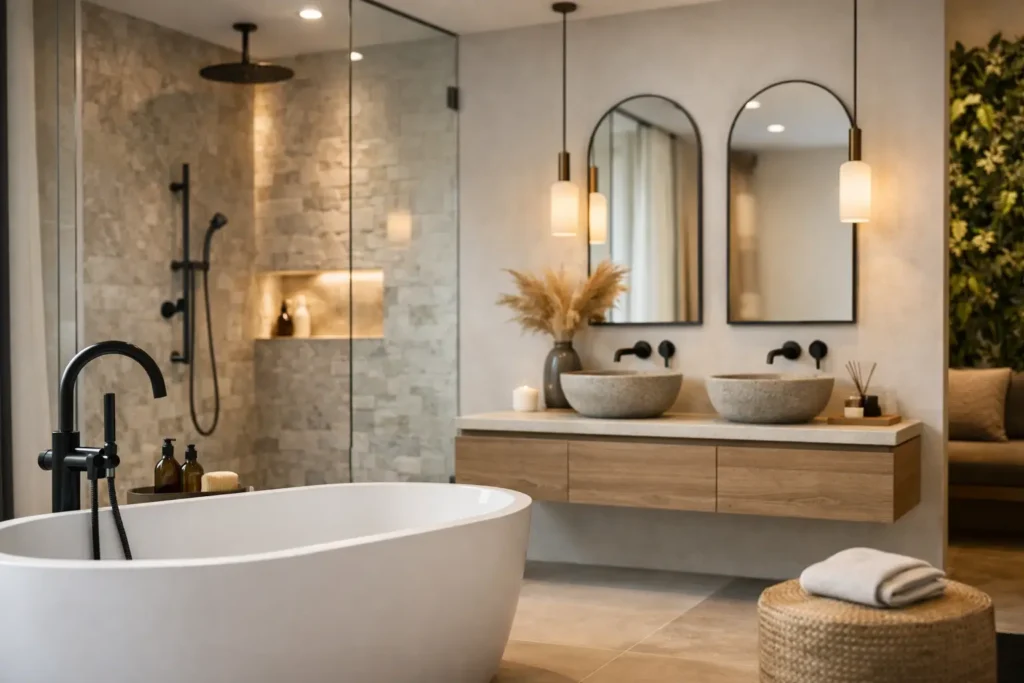
For several years, bathrooms leaned heavily toward bright white surfaces, sharp black hardware, and a minimalist look that could sometimes feel stark. In 2026, the direction is warmer and more considered. Think soft mineral tones, natural wood finishes, textured tile, and fixtures selected for comfort as much as appearance.
This does not mean every bathroom needs to look rustic or overly decorated. Clean-lined contemporary spaces still have a place, especially in newer homes around Leander and Cedar Park. The difference is that homeowners are choosing visual warmth over a one-size-fits-all look. A quiet taupe wall tile, a white oak vanity, or aged brass accents can make a bathroom feel designed rather than assembled from a standard checklist.
The strongest trend is personalization. Your bathroom should reflect how you use it. A busy family may need durable porcelain tile, double sinks, and closed storage that keeps the counter clear. A primary bath may call for a larger shower, better lighting at the vanity, and a layout that creates a more relaxing start and finish to the day.
Spa-Inspired Showers Become the Main Event
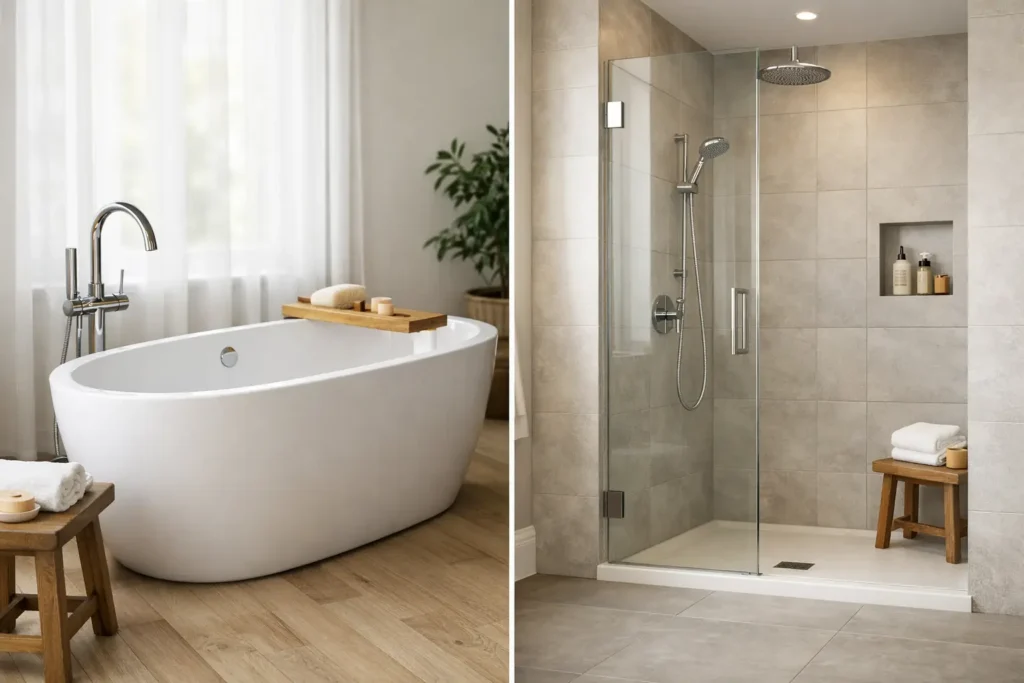
The oversized tub has not disappeared, but more homeowners are putting their investment into the shower. A well-planned walk-in shower can improve accessibility, simplify cleaning, and make the room feel more open. Curbless entries, frameless glass, linear drains, and large-format wall tile are all popular choices because they reduce visual interruptions.
In 2026, shower design is becoming more intentional rather than simply larger. Built-in niches are planned around the bottles people actually use. Benches provide a practical place to sit, shave, or set towels. Handheld shower heads paired with fixed rain-style fixtures add flexibility for every household member.
Steam features and multiple spray zones can be appealing in a primary bath, but they are not the right answer for every home. They require careful planning for ventilation, waterproofing, electrical work, and maintenance. For many homeowners, a spacious shower with excellent drainage, a high-quality valve system, and properly placed lighting delivers more daily value than a long list of specialty features.
Curbless Showers Need Skilled Construction
A barrier-free shower creates a clean, modern appearance and can support aging-in-place goals. It also demands precise work below the surface. The floor must be properly sloped, waterproofed, and integrated with the drain system before tile is installed. This is not a detail to treat as an afterthought.
Expert craftsmanship matters most where it cannot be seen. Correct substrate preparation, waterproofing, grout selection, and ventilation protect the investment long after the finished tile is in place.
Natural Materials and Softer Finishes
Bathroom finishes are moving away from high-contrast, ultra-glossy combinations. Homeowners are choosing materials that add depth without making the room feel busy. Honed-look porcelain, handmade-look ceramic tile, fluted vanity fronts, and stone-inspired surfaces all bring a more comfortable character to the space.
Porcelain remains a smart choice for many bathroom floors and shower walls. It can deliver the appearance of limestone, travertine, wood, or concrete while offering dependable moisture resistance and easier upkeep. Natural stone has a distinctive beauty, but it may need more regular sealing and care. The right choice depends on how much maintenance you want and where the material will be used.
Warmer metals are also gaining ground. Brushed brass, bronze, champagne nickel, and softer brushed finishes can make a bathroom feel refined without looking flashy. Matching every metal exactly is no longer required, but the finishes should feel coordinated. For example, a warm faucet finish can work well with a black shower frame when the rest of the room repeats each tone with purpose.
Better Storage Without a Bigger Footprint
A beautiful bathroom loses its appeal quickly when counters are crowded with skincare, cords, towels, and everyday essentials. That is why storage is one of the most practical 2026 bathroom remodeling trends.
Vanities are becoming more furniture-like, with drawers that organize smaller items more effectively than deep cabinet doors. Full-height linen storage, recessed medicine cabinets, and built-in shower niches keep essentials close without creating clutter. In compact hall bathrooms, a floating vanity can make the floor feel more open while still offering useful drawer storage.
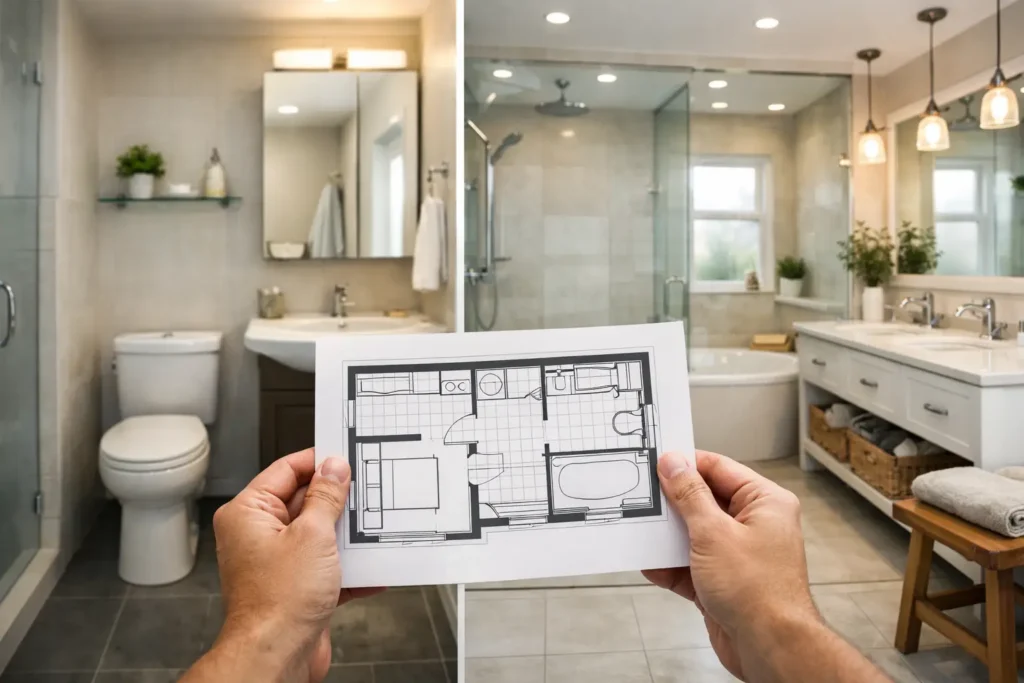
The best storage plan begins before demolition. Consider who uses the bathroom, where they get ready, and what routinely ends up on the counter. A shared bath may benefit from individual drawer zones and outlets inside a cabinet for charging electric toothbrushes or grooming tools. In a primary bath, a dedicated linen cabinet may be more valuable than increasing the vanity by a few inches.
Lighting That Works at Every Hour
One overhead fixture is no longer enough. Layered lighting is a defining feature of bathroom design in 2026 because it improves both function and atmosphere. Vanity lighting should illuminate the face evenly, while ceiling fixtures provide overall brightness and shower-rated lighting supports safety in wet areas.
Sconces at the sides of a mirror are often more flattering and useful than a single fixture above it. They help reduce shadows during shaving, makeup application, or skincare routines. If side sconces do not fit the layout, a well-designed lighted mirror can be a practical alternative.
Dimmers are a small upgrade with a noticeable return. Bright light is helpful on weekday mornings, while a lower setting makes late-night trips less jarring. Under-vanity lighting can also provide a subtle nighttime path without turning on the main lights.
Natural light remains valuable, but privacy must be part of the plan. Frosted glass, high windows, thoughtfully placed skylights, or window treatments designed for moisture-prone rooms can bring in daylight without compromising comfort.
Color Moves Toward Calm and Contrast
The bathroom color palette for 2026 favors colors that feel grounded: clay, sand, mushroom, sage, muted blue, and warm gray. These shades work especially well with wood vanities and stone-look tile. They also give homeowners more personality than an all-white room while staying flexible enough for future updates.
Color does not need to cover every surface. A deep green vanity against lighter walls, a blue-gray tile accent in the shower, or a patterned floor can create a focal point without overwhelming the room. In a smaller bathroom, keeping the wall tile and floor tile within a related color family can make the space feel larger and more cohesive.
Patterned tile is still a strong option, particularly for powder rooms and secondary baths. The key is scale. A bold floor can be memorable in a small room, but combining it with heavily patterned walls, busy countertops, and ornate fixtures can make the room feel dated sooner. Choose one clear focal point and let the remaining finishes support it.
Comfort Features That Earn Their Place
The most lasting bathroom upgrades often do not photograph as dramatically as tile or fixtures. Heated floors are a good example. They add everyday comfort, dry small splashes more quickly, and can be especially appreciated on cold Central Texas mornings. Towel warmers, quiet exhaust fans, and well-placed outlets are similarly modest features that improve daily routines.
Smart controls can be worthwhile when they solve a real problem. Programmable shower controls, humidity-sensing fans, and heated mirror features can add convenience. However, homeowners should avoid adding technology just because it is new. Products with simple controls, reliable warranties, and accessible service options tend to age better than complicated systems that need frequent attention.
Ventilation deserves special attention in every bathroom remodel. A properly sized, quiet exhaust fan helps control moisture, protects paint and finishes, and keeps the room more comfortable. It is one of the least glamorous decisions in the project and one of the most important for lasting quality.
Plan Trends Around Your Home, Not a Photo
A successful remodel adapts current ideas to the architecture and needs of the home. A bold, hotel-inspired primary bathroom may suit one household, while another will benefit more from a durable family bath with better storage and a tub that makes bath time easier. There is no single perfect layout, finish, or fixture package.
Start with the issues that affect daily living: poor flow, inadequate storage, aging finishes, weak lighting, or a shower that is difficult to use. Then select trends that solve those problems while creating a look you will enjoy for years. Oak & Hammer Remodeling helps homeowners turn that plan into a well-managed renovation with thoughtful design, skilled construction, and details built to last.
The right bathroom will not just look current in 2026. It will feel like a better place to begin and end every day.