A backyard in Central Texas needs more than good looks. It has to handle bright afternoon sun, sudden rain, heat that lingers into the evening, and the way your family actually uses the space. When comparing a pergola versus patio cover, the better choice comes down to one question: Do you want an outdoor room that filters the elements, or one that blocks them?
Both options can make a plain concrete slab or underused yard feel finished, welcoming, and more valuable. They do different jobs, however. A pergola creates architectural character and partial shade, while a patio cover offers more complete shelter for outdoor dining, cooking, relaxing, and entertaining.
Pergola Versus Patio Cover: The Core Difference
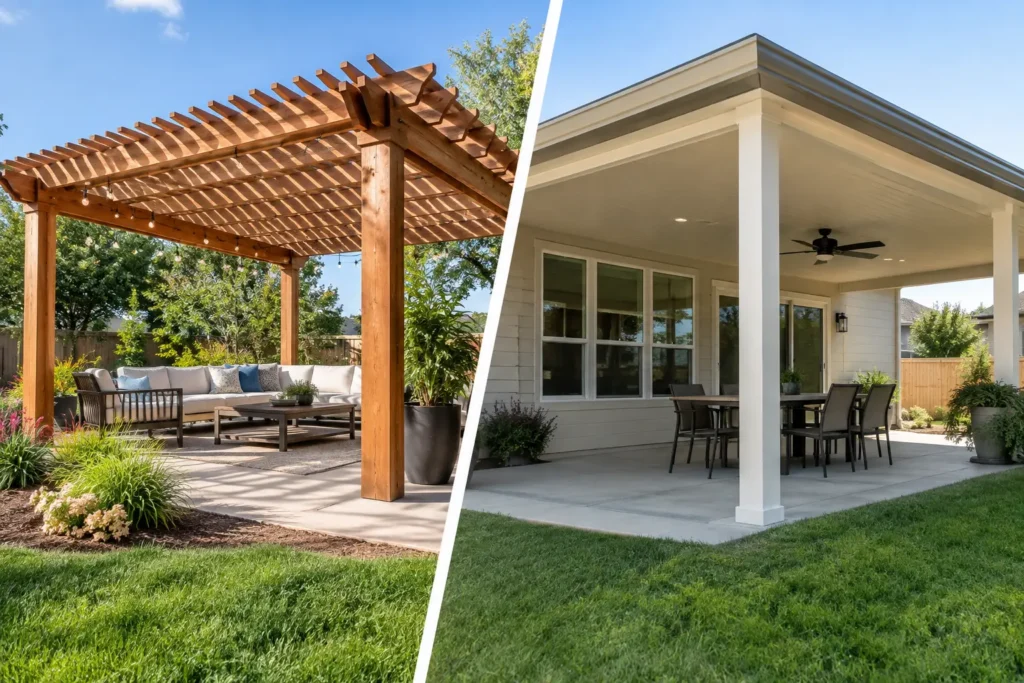
A pergola is an open-air structure made with posts and overhead beams or slats. Its roof is intentionally spaced, allowing sunlight and airflow to pass through. It defines an outdoor living area without closing it in, making it a strong fit for homeowners who want a garden-inspired feature, a focal point over a seating area, or a place for climbing plants.
A patio cover has a solid or nearly solid roof surface supported by posts or attached to the home. Depending on the design, it may use shingles, standing-seam metal, insulated panels, or another roofing material selected to complement the house. It provides substantially more dependable shade and better protection from rain.
That distinction matters on a July afternoon in Leander or Cedar Park. A pergola can make a patio more comfortable, especially with the right orientation and added shade elements. A covered patio is more likely to keep the space usable when the sun is direct or a storm moves through during dinner.
Choose a Pergola When Style and Openness Come First
A pergola is often the right choice when the backyard already has good natural shade or when the goal is to create visual structure rather than full weather protection. It can turn an exposed patio into a defined destination without making the yard feel darker or more enclosed.
What a Pergola Does Well
The strongest advantage of a pergola is its balance of shade and openness. The overhead slats soften sunlight, but they preserve the bright, outdoor feeling that many homeowners want. Because air can move freely through the structure, a pergola can feel less confined than a solid roof on mild days.
Pergolas also offer plenty of design flexibility. A stained wood pergola can bring warmth to a stone patio. A painted structure can coordinate with trim and siding. More contemporary designs may use clean-lined framing and darker finishes for contrast against lighter exterior materials. Built-in lighting, privacy screens, curtains, fans, and climbing vines can make the structure feel more personal over time.
For a smaller patio, a pergola can also provide definition without overwhelming the footprint. It gives outdoor furniture a sense of place, which can make even a simple seating area feel intentionally designed.
Where a Pergola Has Limits
A standard pergola does not provide full rain protection. The spaced roof members may reduce direct sun, but they will not keep cushions, grills, or guests dry during a storm. It also will not deliver consistent shade throughout the day, especially if the structure is not positioned with the sun path in mind.
Homeowners sometimes add retractable fabric canopies, shade cloth, or louvered panels to increase coverage. These upgrades can be useful, but they also add maintenance and should be selected for Texas heat, wind, and UV exposure. If your main goal is to use the patio in most weather conditions, a pergola alone may leave you wanting more coverage.
Choose a Patio Cover for Everyday Protection
A patio cover is designed for homeowners who see the backyard as an extension of the home. If you want to eat outside without watching the forecast, protect your furniture from harsh sun, or create a shaded place for children and guests to gather, a solid cover usually delivers the more practical result.
What a Patio Cover Does Well
The biggest benefit is reliable coverage. A properly designed patio cover blocks overhead sun and protects the patio from light rain and many passing showers. That makes it easier to use the space for an outdoor kitchen, dining table, lounge seating, or game-day gathering without moving everything indoors when the weather changes.
A covered patio can also help protect finishes below it. Furniture, rugs, and exterior accessories typically receive less direct UV exposure, which can reduce fading and weather-related wear. When paired with ceiling fans, lighting, and thoughtfully placed outlets, the space can function comfortably well after sunset.
From a design standpoint, an attached patio cover can look like it has always belonged to the house. Matching the roofline, trim details, columns, and paint colors creates a more cohesive exterior. This is especially valuable for homeowners making multiple outdoor upgrades, such as new concrete, stone work, fencing, or exterior paint.
Considerations Before Building a Patio Cover
More coverage also means more planning. A patio cover needs appropriate structural support, roof drainage, and connection details where it meets the home. Its height, roof pitch, and placement should work with windows, doors, exterior lighting, and the surrounding yard. Local permitting and neighborhood requirements may also apply depending on the project and location.
A solid roof changes the amount of natural light that reaches adjacent interior rooms. Good design can minimize that effect, but it should be considered early. In some cases, skylights, roof transitions, or a partially covered layout can preserve brightness while still giving the patio meaningful shade.
Think About How You Use the Space at 2 P.M.
The most useful way to decide is to picture the space during the hardest part of the day, not just during a pleasant evening. If your patio becomes too hot to use by midafternoon, a solid patio cover is usually the more effective solution. If you mainly want a beautiful structure for morning coffee, evening conversation, and occasional gatherings, a pergola may provide exactly the right amount of shelter.
Also consider what will live beneath the structure. Outdoor kitchens, televisions, upholstered furniture, and dining areas benefit from the protection of a patio cover. A pergola is well suited to fire pit seating, garden pathways, poolside areas, and patios where sun and sky are part of the appeal.
The orientation of your home matters, too. A west-facing patio takes intense late-day sun and may need more substantial overhead coverage. A north-facing space can sometimes work beautifully with a pergola because it receives less direct heat in the first place. Mature trees, neighboring homes, and existing rooflines all affect the final design.
Materials and Maintenance Matter in Texas
Whether you choose a pergola or patio cover, materials should be selected for long-term performance, not just first-day appearance. Properly finished wood brings classic character but needs periodic inspection and maintenance. Metal systems can offer crisp lines and durability, while painted structural components should be protected with quality exterior coatings.
For patio covers, roofing materials and drainage deserve particular attention. Water should be directed away from the home, foundation, and primary walkways. A well-built structure accounts for heat, wind, moisture, and movement from the beginning, rather than treating those details as afterthoughts.
Expert craftsmanship is especially important where a new outdoor structure meets an existing home. The connection should look polished, but it also needs to be built correctly for lasting quality. That is where a full-scope remodeling team can help coordinate design choices, structural work, finishes, and complementary exterior improvements as one cohesive project.
Can You Combine a Pergola and Patio Cover?
Yes, and for many backyards, a combination offers the best result. A solid roof can cover the main dining or cooking area, while a pergola extends the outdoor living zone over a lounge space or pathway. This creates separate areas for different activities without making the entire backyard feel roofed over.
Another option is a patio cover with decorative beam details or an open pergola section at the edge. The result can deliver dependable shade where it is needed most while keeping the design lighter and more architectural.
The right outdoor structure should make you want to use your backyard more often, not ask you to work around its limitations. Start with how your family gathers, where the sun hits hardest, and how you want the finished space to feel. With a thoughtful plan and skilled construction, either choice can turn an overlooked patio into a comfortable part of everyday life.