Selecting materials for an Austin bathroom remodel in 2026 is no longer just a question of color and style. It is a technical decision that determines the longevity and structural health, and resale value of your home. In the unique Central Texas climate, where humidity levels can fluctuate, and local water hardness is a factor the materials you choose must perform under pressure. At Oak and Hammer Remodeling, we guide our clients through a selection process that prioritizes high-performance surfaces and technologically advanced substrates. From the thermal properties of your flooring to the porosity of your shower walls, every choice has a direct impact on how your bathroom functions over time. This guide examines the technical specifications of modern bathroom materials and how they influence the final outcome of your renovation.
Large Format Porcelain vs Traditional Ceramic Tile
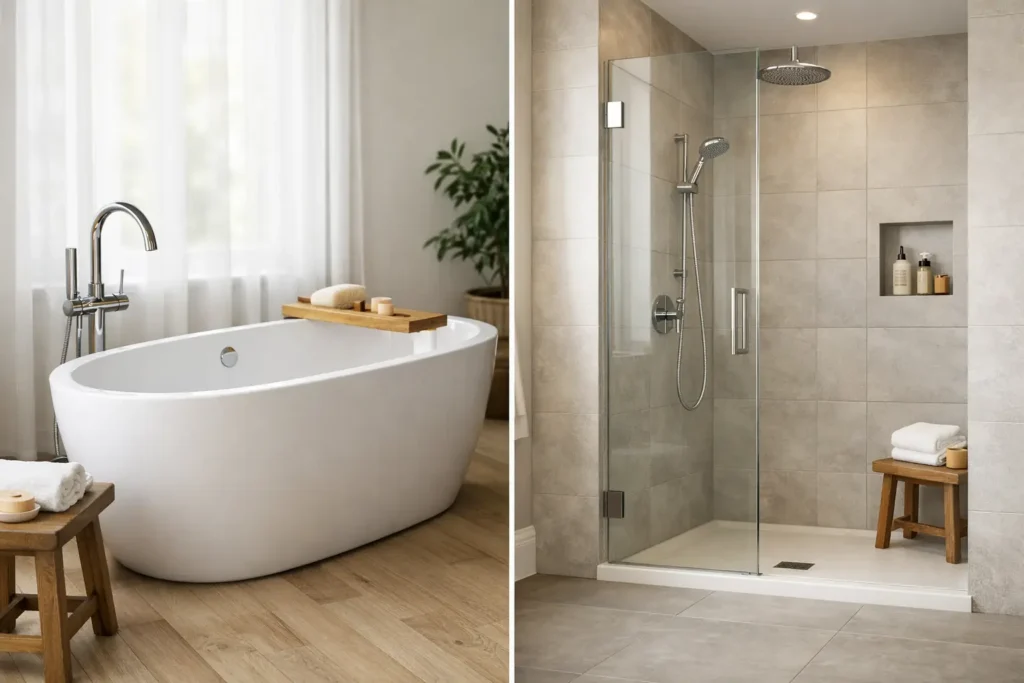
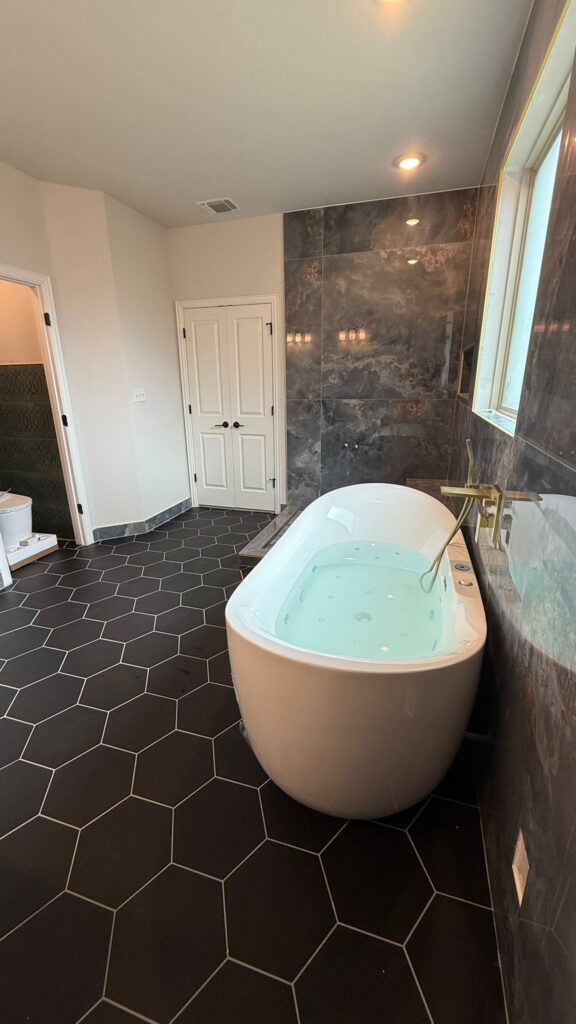
One of the most significant technical shifts in 2026 is the transition to large-format porcelain slabs for both floors and walls. Porcelain is fired at much higher temperatures than standard ceramic, which results in a denser and less porous material. This low porosity is critical for Austin bathrooms because it makes the tile virtually impervious to water absorption and staining from local mineral deposits. Furthermore, large format tiles ranging up to 48 by 96 inches significantly reduce the number of grout lines in a shower. Since grout is the most common point of failure for moisture intrusion and mold growth, minimizing it creates a more hygienic and durable environment. The technical challenge of installing these slabs requires specialized handling and precision leveling to ensure a perfectly flat and lippage-free surface.
- Water Absorption Rates: High-quality porcelain features an absorption rate of less than zero point five percent, making it the gold standard for wet environments.
- Grout Minimization: Using jumbo slabs can reduce grout joints by up to ninety percent compared to standard subway tile installations.
- Structural Rigidity: Porcelain is harder and more scratch-resistant than ceramic, ensuring the floor remains pristine even in high-traffic master suites.
Pro-Tip: When using large-format porcelain, insist that your contractor uses a mechanical leveling system during installation. This ensures that the edges of the tiles are perfectly flush,h which is vital for both aesthetics and safety in a bathroom setting.
Natural Stone and the Reality of Porosity
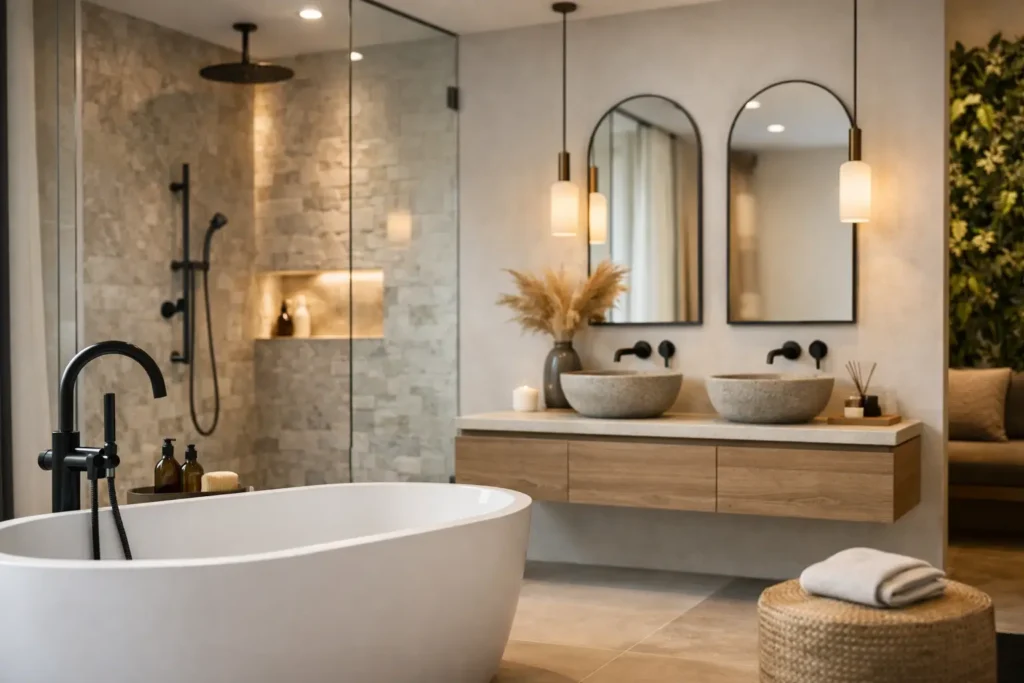
Natural stones like marble and limestone remain popular in Austin for their timeless Hill Country aesthetic, but they come with technical maintenance requirements. Marble is a metamorphic rock composed of calcium carbonate, which makes it highly sensitive to acidic cleaners and moisture. In 2026, we recommend natural stone primarily for accent areas or high-end vanities rather than the interior of a heavy-use shower unless a rigorous sealing schedule is followed. Technically, natural stone requires a high-grade impregnating sealer that penetrates the pores to repel water from within. For homeowners who want the look of stone without the maintenance, we often specify sintered stone or high-definition porcelain mimics that provide the same visual movement with zero porosity and zero maintenance.
Quartz and Sintered Stone for High-Use Countertops
The choice of countertop material is the most important factor for daily durability in an Austin bathroom. In 2026, engineered quartz and sintered stone have overtaken granite as the preferred options. Quartz is composed of roughly ninety percent crushed natural quartz and ten percent resin, which creates a completely non-porous surface that never requires sealing. This is a technical advantage in a bathroom where toothpaste, makeup, and hair products can easily stain more porous materials. Sintered stone takes this a step further by using extreme heat and pressure to bond minerals without resins, making it entirely heatproof. This allows you to place hot styling tools directly on the counter without the risk of melting the resin or causing a thermal crack.
- Chemical Resistance: Engineered quartz is resistant to most common household chemicals, ensuring the finish remains glossy and unaffected by spills.
- Bacteria Resistance: Because these surfaces are non-porous, they do not harbor bacteria or mold, making them the most hygienic choice for a vanity.
- Impact Strength: Sintered stone is incredibly dense and resistant to chipping,g making it ideal for the edges around undermount sinks.
Pro-Tip: For a truly seamless look, coordinate your countertop material with your shower threshold and niche sills. Using the same non-porous stone for these high-moisture touchpoints prevents water from seeping into the framing of the shower.
The Technical Role of Epoxy Grout in 2026
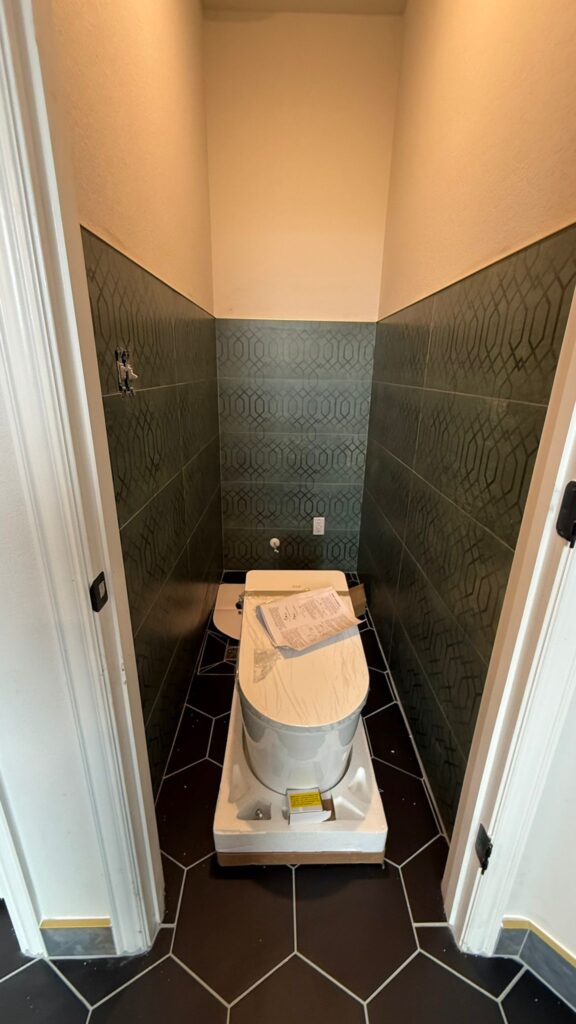
While tile selection is critical, the choice of grout is what holds the entire system together. In 2026, we have moved away from traditional cementitious grout in favor of high-performance epoxy grout for luxury Austin remodels. Epoxy grout is made from two parts epoxy resin and a filler powder, which makes it completely waterproof and chemically resistant once cured. Unlike standard grout, which is porous and requires periodic sealing, epoxy grout is essentially a plastic bond that does not absorb water or stains. This technical choice prevents the common issue of grout discoloration and cracking. It also provides superior bond strength, which is essential for maintaining the integrity of tile installations on floors that may experience slight structural movement.
- Stain Immunity: Epoxy grout does not absorb pigments from hair dye or soaps, ensuring the color remains consistent for the life of the bathroom.
- Structural Flexibility: The resinous nature of epoxy allows it to better withstand the subtle vibrations and settling of a Texas home without cracking.
- Zero Maintenance: Once installed, epoxy grout never needs to be sealed and can be cleaned with simple soap and water.
Pro-Tip Epoxy grout has a much faster set time than standard grout. Ensure your installation team is experienced with this material, as it requires working in small batches and immediate cleaning to prevent a permanent haze on the tile surface.
Moisture-Resistant Substrates and Backer Boards
The most important material choices in a bathroom remodel are the ones you will never see after the project is finished. In 2026, we strictly avoid standard green board drywall in wet areas. Instead, we utilize cement-based backer boards or high-density extruded polystyrene foam boards. These materials are technically engineered to be dimensionally stable when exposed to water. Foam backer boards in particular provide a built-in vapor barrier and thermal break, which prevents condensation from forming inside the wall cavity. This is a critical technical detail for Austin homes where the temperature differential between a cool air-conditioned interior and a hot exterior can create moisture issues within the building envelope. Using the correct substrate ensures that your tile and waterproofing layers have a solid and rot-proof foundation.
- Dimensional Stability: High-performance backer boards do not swell or delaminate when wet, ensuring the tile bond remains permanent.
- Integrated Vapor Barriers: Modern foam boards act as a shield, preventing humidity from reaching the wooden studs and insulation.
- Mold Prevention: These inorganic materials do not provide a food source for mold,d even if moisture somehow manages to bypass the primary waterproofing layer.
Conclusion
The results of your Austin bathroom remodel are directly tied to the technical specifications of the materials you select. By choosing low-porosity porcelain and non-porous countertops and high-performance epoxy grout, you are engineering a space that will remain beautiful and functional for decades. At Oak and Hammer Remodeling, we believe that a luxury bathroom should be as technically sound as it is visually impressive. Our 2026 material standards are designed to protect your home from the unique challenges of the Central Texas environment while providing a sophisticated and low-maintenance experience. Investing in high-quality materials at the start of your project is the most effective way to ensure a high return on investment and a home that stands the test of time.
Transforming your home is a journey that begins with a clear vision and professional expertise. To learn more about the latest remodeling standards and bathroom innovations in the Central Texas area, you can explore our comprehensive kitchen and home renovation guides for local inspiration. If you are ready to select materials that will elevate your space while providing long-term durability, securing expert consultation and a professional project assessment is the most effective way to ensure a seamless experience. You can view our history of craftsmanship and client success to see how we have revitalized homes across Austin and Leander for over a decade. At Oak and Hammer, we offer tailored bathroom remodeling solutions and are recognized as a local home remodeling contractor in Austin designed to meet the unique structural needs of Texas properties. We are dedicated to helping you create a space that balances modern luxury with the highest quality Austin remodeling standards your residence requires.
FAQ
Is porcelain better than ceramic for an Austin bathroom?
Yes. Porcelain is denser and less porous, making it more resistant to moisture and mineral deposits common in Austin.
Does a quartz countertop need to be sealed?
No. Quartz is an engineered non-porous material that never requires sealing and is highly resistant to staining.
What is the advantage of epoxy grout?
Epoxy grout is completely waterproof and stain-resistant and does not require sealing, unlike traditional cement grout.
Can I use marble in my shower?
You can, but marble is porous and requires regular sealing to prevent staining and water damage.
What is sintered stone?
Sintered stone is a high-performance material made from natural minerals fused under extreme heat and pressure, making it heat and scratch-proof.
Why are large-format tiles popular in 2026?
They provide a modern look and significantly reduce the number of grout lines, making the bathroom easier to clean and more water-resistant.
What backer board should be used in a shower?
We recommend cement backer boards or waterproof foam boards rather than standard moisture-resistant drywall.
Is natural stone more expensive to install?
Yes. Natural stone often requires more labor for cutting and sealing and specialized mortars for a secure bond.
How do I protect my bathroom cabinetry from humidity?
Using high-performance ventilation and choosing cabinetry with water-resistant finishes are the best ways to prevent moisture damage.
Does material choice affect home resale value?
Absolutely. High-quality and durable materials like quartz and porcelain are highly attractive to Austin buyers and can increase your home value.