A small ceiling stain can look harmless until the next hard rain turns it into peeling paint, wet insulation, or damaged framing. This roof repair or replacement guide helps homeowners make a clear decision before minor wear becomes a larger project. The right choice depends on the age of the roof, the extent of the damage, the condition of the underlying structure, and how long you plan to stay in the home.
For homeowners around Austin, the decision also has a local dimension. Summer heat, sudden downpours, hail, high winds, and intense UV exposure can shorten the useful life of roofing materials. A careful evaluation gives you a better path forward than simply patching the most visible problem.
A Roof Repair or Replacement Guide Starts With the Source
The visible symptom is not always the actual issue. A water spot on a bedroom ceiling may come from damaged shingles, but it could also result from failed flashing around a vent, a worn pipe boot, a loose chimney transition, or water entering near a skylight. Repairing only the stain indoors does nothing to stop moisture from returning.
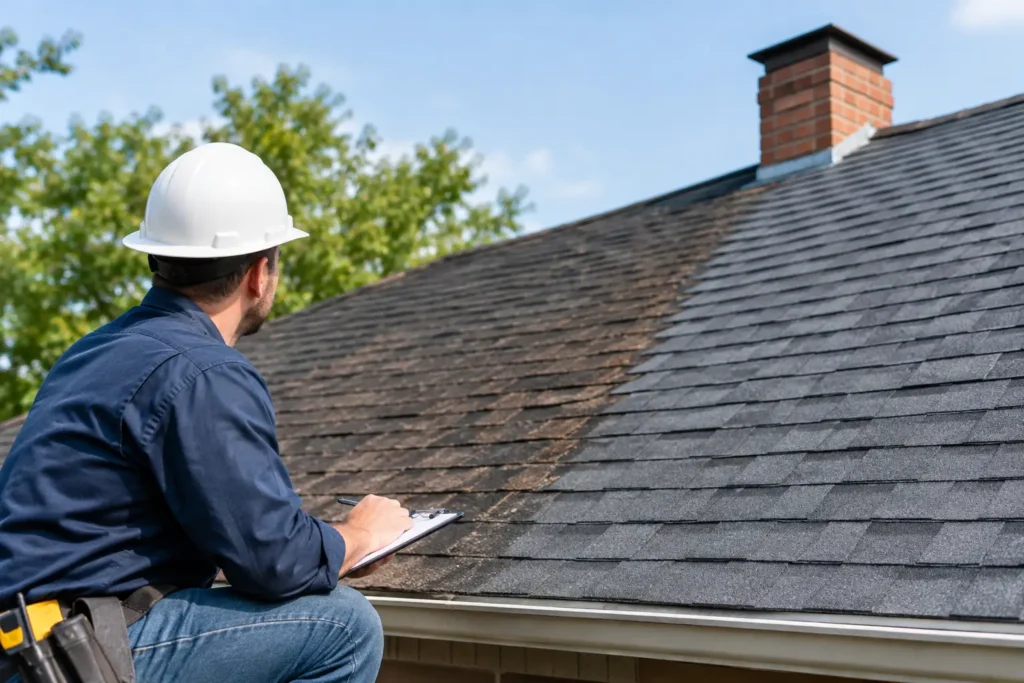
Start by looking for changes you can see from the ground and inside the attic. Missing, cracked, curled, or darkened shingles are common warning signs. Granules collecting in gutters, rusted flashing, sagging rooflines, and exposed nail heads deserve attention as well. Indoors, watch for damp insulation, musty odors, bubbling drywall, discolored ceilings, and sunlight visible through the roof decking.
Do not climb onto a steep or questionable roof to investigate it yourself. Besides the safety risk, walking in the wrong area can damage brittle shingles or conceal the condition a professional needs to assess. A thorough inspection should consider the roofing surface, penetrations, flashing, drainage, ventilation, decking, and any moisture damage below the roofline.
When Roof Repair Makes Sense
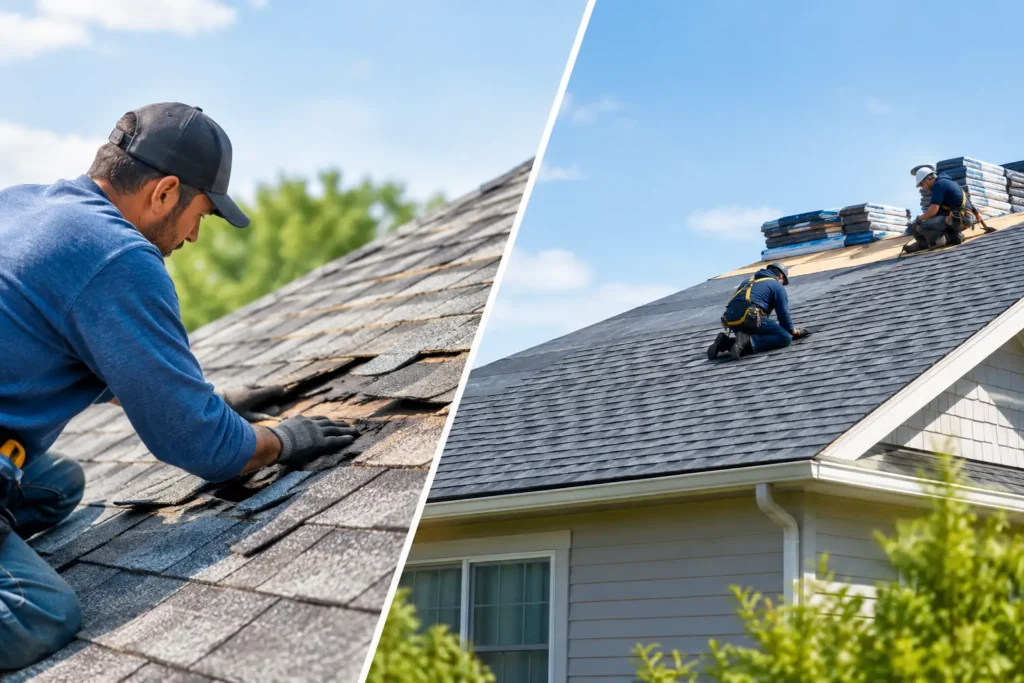
A focused repair is often the smart choice when damage is isolated and the rest of the roof still has useful service life. Replacing a handful of wind-damaged shingles, resealing a flashing detail, repairing a pipe boot, or correcting a small leak can protect the home without disrupting more of the exterior than necessary.
Repair is usually worth considering when the roof is relatively young, the materials are still in generally good condition, and there is no widespread water intrusion. It can also be practical after a localized storm event, provided the surrounding shingles are not brittle or deteriorated.
The key question is whether a repair addresses the cause rather than temporarily hiding it. For example, replacing shingles around a vent may not solve a recurring leak if the vent flashing is corroded. Likewise, sealing an area with roofing cement may stop water briefly but can fail again as heat and movement affect the material.
A quality repair should blend with the existing roof as closely as possible and restore the weather barrier beneath the shingles. Color matching can be difficult on older roofs because sun exposure fades materials over time. That cosmetic difference may be acceptable for a small repair, but it is worth discussing before work begins.
Signs Replacement Is the Better Long-Term Investment
Roof replacement becomes the stronger choice when problems are widespread, materials are nearing the end of their expected life, or repeated repairs are adding up without delivering confidence. A roof can look mostly intact from the driveway while its shingles have lost protective granules, its underlayment has aged, or its decking has started to soften around multiple leak points.
Consider replacement when you see several of these conditions:
- Shingles are curling, cracking, balding, or missing across multiple roof sections.
- Leaks keep appearing in different rooms or return after previous repairs.
- The roof deck sags, feels soft, or shows signs of long-term moisture exposure.
- Storm damage affects a broad area rather than one isolated section.
- The existing roof is near the end of its expected service life and no longer provides dependable protection.
Replacement gives homeowners the opportunity to correct hidden issues that a surface patch cannot reach. During a properly managed project, the old roofing is removed so the deck can be inspected, damaged areas can be addressed, and new underlayment, flashing, and ventilation details can be installed as needed. That full-system approach matters because shingles alone are only one layer of roof protection.
For a homeowner planning exterior painting, new siding, windows, or a larger renovation, roof replacement can also make scheduling easier. Coordinating major exterior work protects new finishes and helps create a cleaner, more intentional final result.
Consider Age, Damage, and Your Plans for the Home
There is no single age at which every roof must be replaced. Material type, installation quality, attic ventilation, tree coverage, weather exposure, and past storm damage all affect longevity. Still, an older roof with a new leak deserves a different level of scrutiny than a newer roof with a single damaged shingle.
Your plans for the property matter, too. If you expect to remain in your home for many years, replacing an aging roof before recurring issues develop can offer peace of mind and help protect the rest of your investment. If a move may be closer, a well-documented repair might be appropriate when the roof is otherwise sound. Either way, do not let a short-term goal lead to a repair that leaves an obvious concern for the next inspection or the next major rainstorm.
Also consider energy performance. A hot, poorly ventilated attic can place extra stress on roofing materials and make upper rooms less comfortable. Proper ventilation and insulation work together to manage heat and moisture. They are not add-ons to ignore when evaluating a roof, especially in Central Texas where prolonged heat tests every exterior surface.
What a Professional Roofing Assessment Should Cover
A useful assessment should be more than a quick glance at shingles. You should understand what is damaged, why it happened, whether there is active moisture intrusion, and what solution will provide dependable results. Clear communication is part of quality craftsmanship.
Ask the contractor to explain the condition of the shingles, flashing, roof penetrations, gutters, and visible decking. If replacement is recommended, find out whether damaged decking will be addressed, how ventilation will be evaluated, and how the work area will be protected during construction. You should also know how landscaping, driveways, and exterior features will be treated with care throughout the project.
For storm-related damage, documentation is particularly useful. Photos and a written description of the affected areas can help you understand the scope of work and keep records for your home. Avoid making a decision based solely on the most dramatic-looking spot. The best recommendation considers the full roof system and your long-term needs.
Choosing Materials That Fit Your Home
Asphalt shingles remain a practical choice for many homes because they offer a broad range of colors, styles, and performance levels. Architectural shingles can provide more dimension and a more substantial appearance than basic three-tab products, while upgraded impact-resistant options may be worth considering in areas with frequent hail.
Material selection should balance appearance, durability, maintenance needs, and the style of your home. A roof color that looks attractive on a sample can appear very different across a large sunlit surface. Consider the home’s brick, stone, siding, trim, and surrounding landscape before choosing. A cohesive exterior can strengthen curb appeal while a quality installation protects the home beneath it.
The details matter as much as the shingle selection. Proper flashing, durable underlayment, correctly installed vents, and careful transitions around chimneys and roof penetrations are what help a roof stand up to changing weather. Experienced workmanship is what turns quality materials into lasting protection.
Make the Decision Before the Next Leak Makes It for You
Roof damage rarely improves with time. Moisture can travel along framing and insulation before it becomes visible indoors, which means waiting for a larger stain may allow a smaller repair to become a more involved restoration. Addressing concerns early gives you more choices, better planning control, and a clearer understanding of what your home needs.
Oak & Hammer Remodeling helps homeowners evaluate exterior improvements with the same attention to detail brought to every remodeling project. Whether your roof needs a targeted repair or a full replacement, choose a solution that protects your home, supports its value, and lets you feel confident when the forecast calls for the next Texas storm.