In the Austin residential market, the transformation of a bathroom from a functional utility to an architectural sanctuary is driven by a fusion of structural precision and sensory design. For homeowners across Travis County, the “modern” bathroom is no longer defined by surface-level aesthetics but by the sophisticated architectural details that improve daily performance and long-term property value. As Austin continues to evolve into a global design hub, we are seeing a shift toward “Wellness-Driven Architecture,” where every element from the slope of a curbless shower to the spectral output of a backlit mirror is engineered to support a restorative lifestyle. At Oak Hammer Remodel, we specialize in the technical execution of these high-end bathroom transformations in Austin, TX. This guide provides a deep dive into the architectural benchmarks that define a world-class Austin bathroom, ensuring your remodel is both a structural masterpiece and a peak-performance retreat.
Curbless Wet Room Engineering and Invisible Drainage Systems
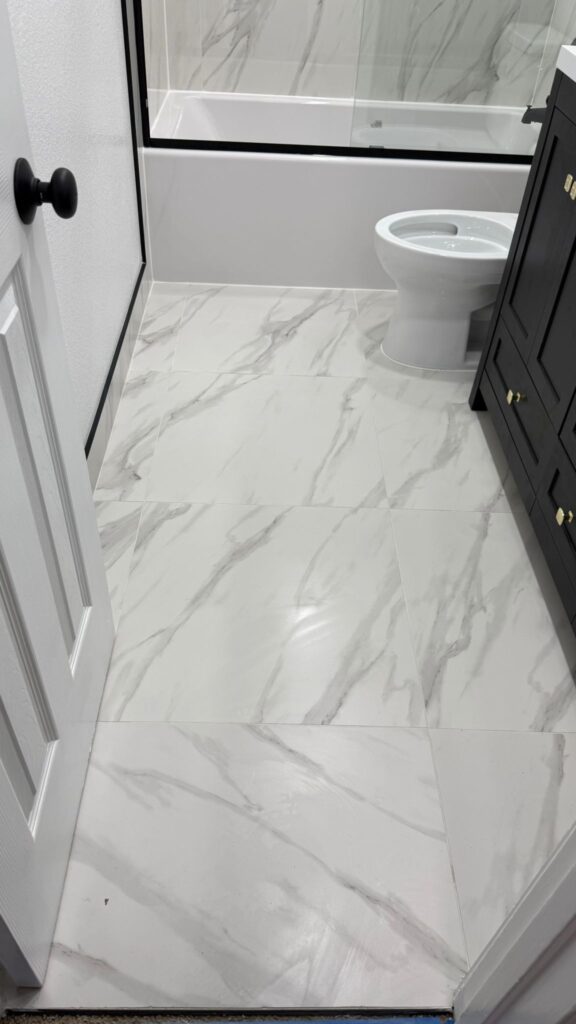
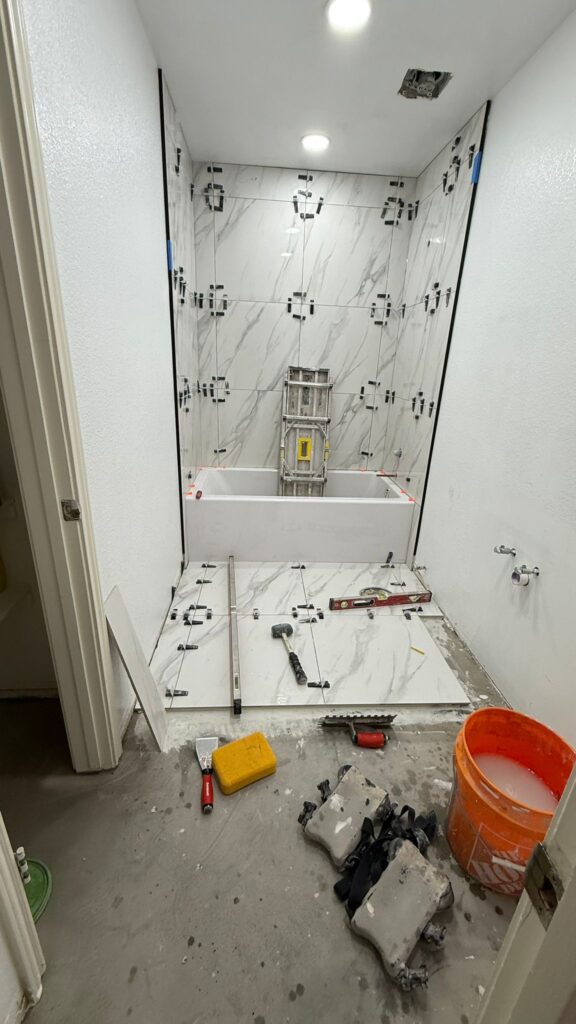
The most impactful architectural detail in 2026 is the seamless “Wet Room” transition. By eliminating the traditional shower curb, we technically expand the visual floor plane, making even compact Austin primary baths feel expansive. Achieving this requires a rigorous structural modification of the floor joist system to allow the shower pan to sit flush with the main bathroom floor. We utilize high-capacity linear drains positioned discreetly against the wall, which technically allows for a single-slope pitch toward the drain, enabling the use of large-format 24×48 or 48×48 porcelain slabs that minimize grout lines and maximize hygienic performance.
- Structural Joist Recessing: We technically sister and reinforce floor joists to create the necessary 2-inch drop for the sloped mortar bed, ensuring the final tile surface is perfectly level with the “dry” zone.
- Capillary Break Geometry: To prevent moisture migration, we engineer a technical “break” beneath the tile at the room’s transition point, utilizing high-performance sealants and waterproof membranes.
- Large-Format Sintered Stone: For 2026, we prioritize sintered stone for wet rooms because it is technically non-porous and resistant to the calcium and mineral deposits common in Austin’s hard water.
Pro-Tip: When planning a wet room for your Austin home transformation, always insist on a “tanking” system that extends the waterproofing membrane at least 12 inches past the wet zone and up the walls to 72 inches. Technically, this “belt-and-suspenders” approach is the only way to guarantee a leak-free environment in a barrier-free layout. View our moisture management standards on our service area page.
Biophilic Niches and Integrated Architectural Lighting
In 2026, the architectural “niche” has evolved from a simple soap shelf into a lighted design feature that brings the outdoors in. We are seeing a trend toward Biophilic Niches, recessed architectural cavities that are technically engineered with integrated LED grow-lights and drainage to support living plants. These details are further enhanced by bio-adaptive lighting systems that sync with the sun’s progression. By utilizing “Tunable White” LED technology, we can technically deliver 5000K daylight-spectrum light in the morning to energize the resident and transition to a calming 2700K amber glow in the evening to prepare the body for rest.
- Recessed “Halo” Lighting: We engineer 45-degree channels into shower niches and vanity mirrors to technically house LED strips, providing “halo” lighting that eliminates shadows during morning routines.
- Spectral Power Distribution (SPD) Logic: Our lighting controllers technically adjust the specific light wavelengths to enhance the natural colors of Texas limestone and warm wood vanities.
- Vapor-Sealed Luminaire Integration: All architectural lighting in the wet zone is technically rated for “Wet Locations” (IP67), ensuring the electrical infrastructure is completely isolated from humidity.
Pro-Tip: For a truly transformative look in your bathroom remodeling in Austin, specify backlit mirrors with an “Anti-Fog” heating element. Technically, these mirrors utilize a low-voltage heating pad that prevents condensation, ensuring your architectural lighting remains clear and functional even after a high-temperature steam session.
Floating Millwork and Furniture-Grade Structural Anchoring
A defining architectural detail of the contemporary Austin bath is the floating vanity. By suspending the cabinetry off the floor, we create a “Lightness of Form” that contributes to an airy, spa-like atmosphere. However, floating millwork requires significant structural engineering. In 2026, we reinforce the wall framing with specialized steel brackets or double-thick blocking to technically manage the cantilevered weight of heavy stone countertops and dual sinks. This approach not only enhances the design but also simplifies floor maintenance and allows for the installation of motion-activated “wayfinding” lights beneath the cabinet.
- Cantilevered Load Calibration: We technically calculate the static load of your selected stone (such as 3cm quartzite) to ensure the wall-anchoring system exceeds the safety factor for weight-bearing millwork.
- Integrated Charging Stations: We engineer custom drawers with “Home Run” electrical circuits and internal cable management, technically hiding hair tools and electric toothbrushes to maintain a clutter-free surface.
- Fluted Wood Detailing: For a high-performance 2026 look, we utilize fluted white oak or walnut fronts that add tactile depth and “Acoustical Softening” to the hard surfaces of the bathroom.
Pro-Tip: When choosing a floating vanity for your Austin bathroom remodel, ensure the bottom of the cabinet sits at least 10 inches above the floor. Technically, this height is the “sweet spot” that allows for easy cleaning and provides enough space for the architectural “glow” lighting to diffuse properly across the floor tiles.
Advanced Moisture Management and High-Volume Ventilation
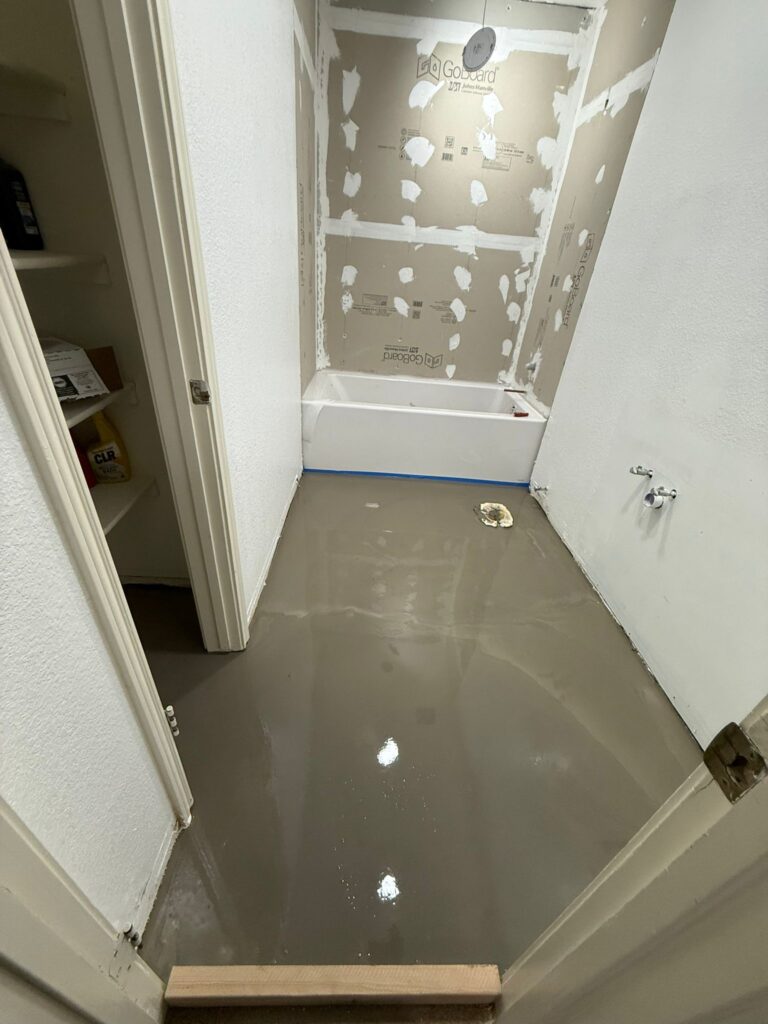
The final, and perhaps most important, architectural detail is the “Invisible Infrastructure” of ventilation. In 2026, we utilize ultra-quiet, high-CFM (Cubic Feet per Minute) fans that are technically sized to the specific volume of the room. Strategic remodeling includes the installation of humidity sensors that automatically trigger the exhaust system when vapor levels rise, protecting your architectural details from mold and wood rot. This technical oversight is essential for maintaining the performance of high-end finishes like Venetian plaster or custom wood paneling in a high-moisture environment.
Conclusion
Transforming an Austin bathroom through architectural details is a strategic investment in both lifestyle and building science. By prioritizing the technical execution of curbless transitions, bio-adaptive lighting, and reinforced floating millwork, you create a space that functions with the precision of a high-performance machine while feeling like a luxurious sanctuary. In 2026, the hallmark of “The Right Way” to build is ensuring that every beautiful detail is supported by a foundation of structural integrity. At Oak Hammer Remodel, we are dedicated to providing the engineering-grade expertise and local Austin insights needed to deliver bathrooms that stand as a testament to modern Texas craftsmanship.
Your journey toward a high-performance sanctuary begins with professional technical insight. To stay updated on the latest building standards and luxury trends in Central Texas, you can access our technical remodeling blog for ongoing inspiration. If your residence is ready for a precision-engineered bathroom transformation, securing expert consultation and a formal project estimate is the most effective way to ensure a seamless experience. You can review our history of excellence and client testimonials to see how we have served homes across the Austin region for years. At Oak Hammer Remodel, we offer specialized residential structural solutions and are recognized as a leading home remodeling contractor in Austin dedicated to delivering the highest standards of Texas craftsmanship.
FAQ
What is the benefit of a curbless shower in 2026?
Technically, a curbless shower provides better accessibility (Universal Design), creates a seamless visual flow that makes small rooms look larger, and allows for easier maintenance of large-format tiles.
How do I prevent my floating vanity from sagging?
We technically reinforce the wall framing with internal blocking or heavy-duty steel brackets during the structural phase to ensure the vanity is safely anchored and can support the weight of stone tops.
What is bio-adaptive lighting in a bathroom?
It is a lighting system technically programmed to change color temperature throughout the day, mimicking the sun to help regulate your circadian rhythm and improve your morning and evening routines.
Why is Austin’s hard water a factor in material selection?
Hard water minerals can clog standard showerheads and stain porous stones. Technically, we recommend high-performance porcelain and thermostatic valves that are easier to clean and more durable in the Austin area.
How much does a high-end bathroom remodel cost in Austin?
For 2026, a luxury transformation involving structural changes and smart technology typically ranges from $45,000 to $90,000+, depending on the square footage and technical features.
Do I need a special permit for a bathroom remodel?
Yes. In Austin, any project involving plumbing, electrical, or structural changes technically requires a trade permit to ensure the work meets 2026 building codes and safety standards.
What is a “linear drain” and why is it used?
A linear drain is a long, narrow drain that technically allows the entire shower floor to be pitched in one direction, enabling the use of larger tiles without the need for complex “envelope” cuts.
How does smart technology improve bathroom performance?
Smart features like humidity-sensing fans and digital thermostatic valves technically optimize energy use while protecting your home from moisture damage and ensuring a perfect water temperature.
What are “large-format” tiles?
These are tiles that are 24×24 inches or larger. Technically, they are preferred in 2026 because they result in fewer grout lines, creating a cleaner look and reducing the surface area where mold can grow.
Does your company handle the design-build process?
Yes. As a local home remodeling contractor in Austin, we manage everything from the initial architectural drawings and engineering to the final installation of high-end finishes.