In the 2026 Austin real estate market, the kitchen has moved beyond its traditional role as a culinary workspace to become a high-performance hub of architectural innovation. For homeowners in Central Texas, the “modern kitchen” is now defined by a sophisticated blend of regional aestheticism and advanced building science. We are seeing a decisive shift away from the sterile, “operating room” aesthetics of the past decade toward environments that emphasize organic warmth, tactile materials, and “invisible” technology. These trends are not merely stylistic; they are driven by the technical demands of Austin’s climate and a growing focus on indoor air quality and structural longevity. At Oak Hammer Remodel, we integrate these future-forward concepts with rigorous engineering to ensure every renovation is as durable as it is beautiful. This guide examines the technical trends currently reshaping kitchen remodeling in Austin, TX, and the performance standards required to execute them.
Thermal Mass and Statement Stone: The Rise of Dramatic Quartzite
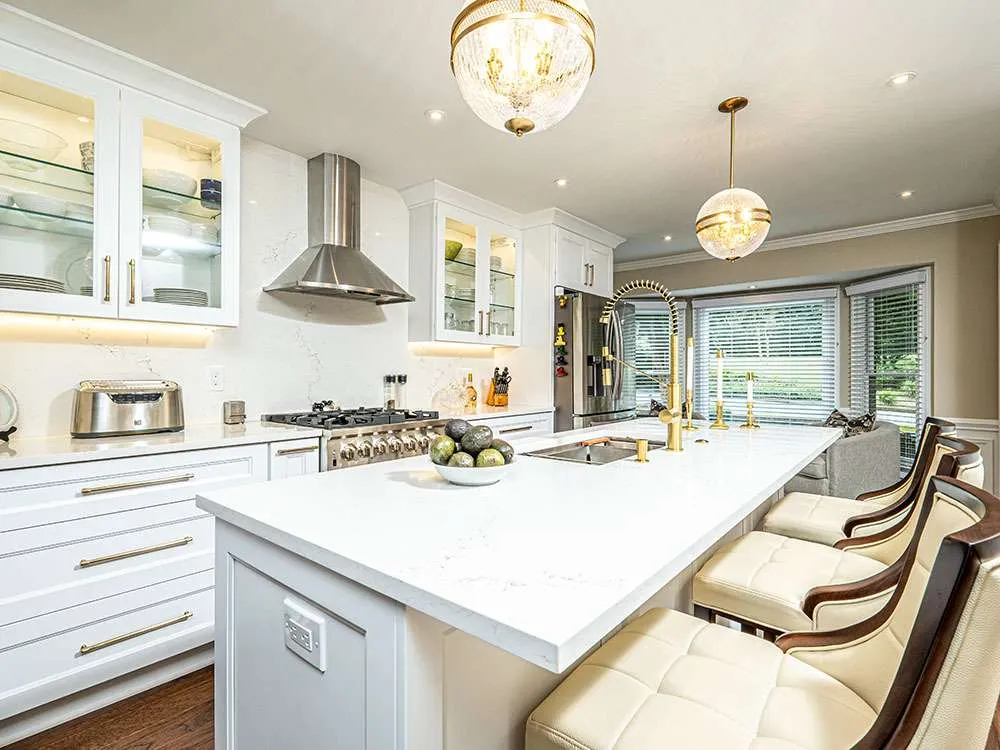
One of the most visually and technically significant trends in 2026 Austin kitchens is the transition to bold, statement-grade natural stone. Homeowners are bypassing uniform, safe surfaces in favor of natural quartzite and marble that feature heavy veining and “geological narratives.” Technically, quartzite is highly sought after in Texas for its superior hardness and thermal resistance, making it ideal for the high-activity environment of an Austin family kitchen. We are seeing a surge in “full-height” slab backsplashes and waterfall islands that treat the stone as a structural art piece. From an engineering standpoint, these massive slabs require reinforced cabinetry sub-frames and precision-leveled floor joists to support the significant static load.
- Stone-to-Ceiling Engineering: We technically engineer wall supports to accommodate full-height stone slabs that extend to the ceiling, eliminating grout lines and creating a monolithic visual plane.
- Thermal Performance of Quartzite: Unlike engineered surfaces, natural quartzite technically resists high heat, which is essential for homeowners integrating professional-grade range tops.
- Book-Matched Seam Calibration: In 2026, the gold standard is the “book-match” installation, where we technically align the natural veining across seams to create mirror-image patterns.
Pro-Tip: When selecting a dramatic slab for your Austin home transformation, always request a “leathered” or “honed” finish. Technically, these textures hide fingerprints and water spots significantly better than high-gloss polished surfaces, maintaining a “quiet luxury” look with minimal maintenance.
Invisible Intelligence and Disappearing Appliances
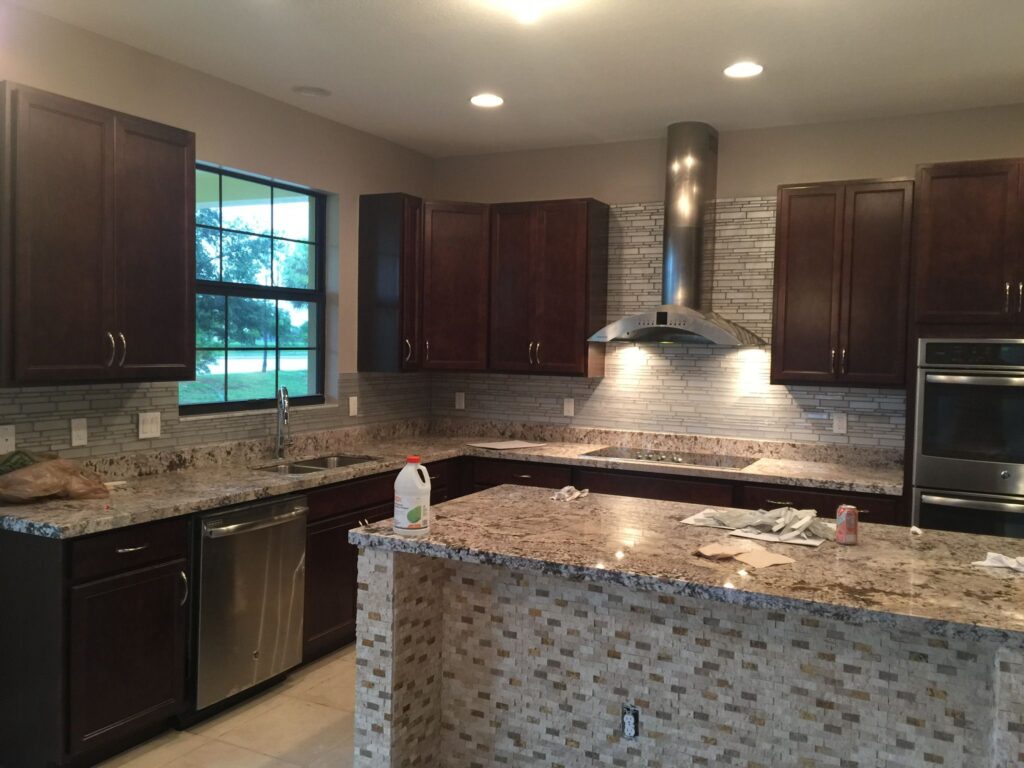
The “smart kitchen” of 2026 is no longer defined by flashy gadgets but by invisible, high-performance integration. Austin homeowners are prioritizing a “seamless silhouette” where the mechanical elements of the kitchen disappear. This is achieved through panel-ready appliances that are technically integrated into the custom millwork, using heavy-duty, zero-clearance hinges. Furthermore, we are seeing the rise of “induction-under-stone” technology, where the induction burners are technically installed beneath a porcelain or stone slab, leaving the countertop completely flat and multifunctional when not in use. This level of integration requires a high degree of electrical precision and specialized ventilation planning.
- Matter-Standard Interconnectivity: We install smart hubs that utilize the “Matter” protocol, technically allowing your refrigerator, oven, and lighting to communicate across a single, secure local network.
- Induction Thermal Management: Under-counter induction units require specific technical ventilation to dissipate heat from the electronic coils, ensuring the longevity of both the appliance and the stone.
- Concealed “Appliance Garages”: We engineer custom cabinetry with pocket doors and internal power strips to technically hide coffee stations and mixers, keeping the primary workspace clutter-free.
Pro-Tip: If you are transitioning to an induction-ready kitchen, technically ensure your electrical panel has at least 50 amps of dedicated capacity for the cooktop. Induction is significantly more energy-efficient than gas, but it requires a high-amperage “home run” circuit to operate its precision magnets. Explore our technical service packages for more electrical insights.
Bio-Adaptive Lighting and Circadian-Matched Atmospheres
As wellness-driven design becomes the standard in Austin, kitchen lighting is being reimagined as a biological support system. In 2026, a high-end kitchen remodel includes layered, bio-adaptive lighting that synchronizes with the homeowner’s circadian rhythm. This involves the technical installation of “Tunable White” LEDs that shift their spectral power distribution throughout the day. In the morning, the system delivers high-intensity 5000K light to stimulate focus; by the evening, it automatically transitions to a warm 2700K to support relaxation. This requires a sophisticated DMX or low-voltage control system integrated during the structural wiring phase.
- Flicker-Free Dimming Protocols: We utilize high-quality drivers that technically allow for dimming down to 0.1%, ensuring perfectly smooth transitions between lighting “scenes.”
- Under-Cabinet Task Calibration: Task lighting is technically positioned to eliminate shadows on the prep surface while maintaining a High Color Rendering Index (CRI 95+) to ensure food colors appear natural.
- Dynamic Accent Layers: We integrate LED channels into toe-kicks and open shelving to provide “wayfinding” light that activates via motion sensors during late-night use.
Pro-Tip: For a truly high-end feel in your kitchen remodeling in Austin, specify “hidden” outlets like Plugmold strips installed under the upper cabinets. Technically, this keeps your stone or tile backsplash completely unbroken by electrical plates, allowing the material’s pattern to flow uninterrupted.
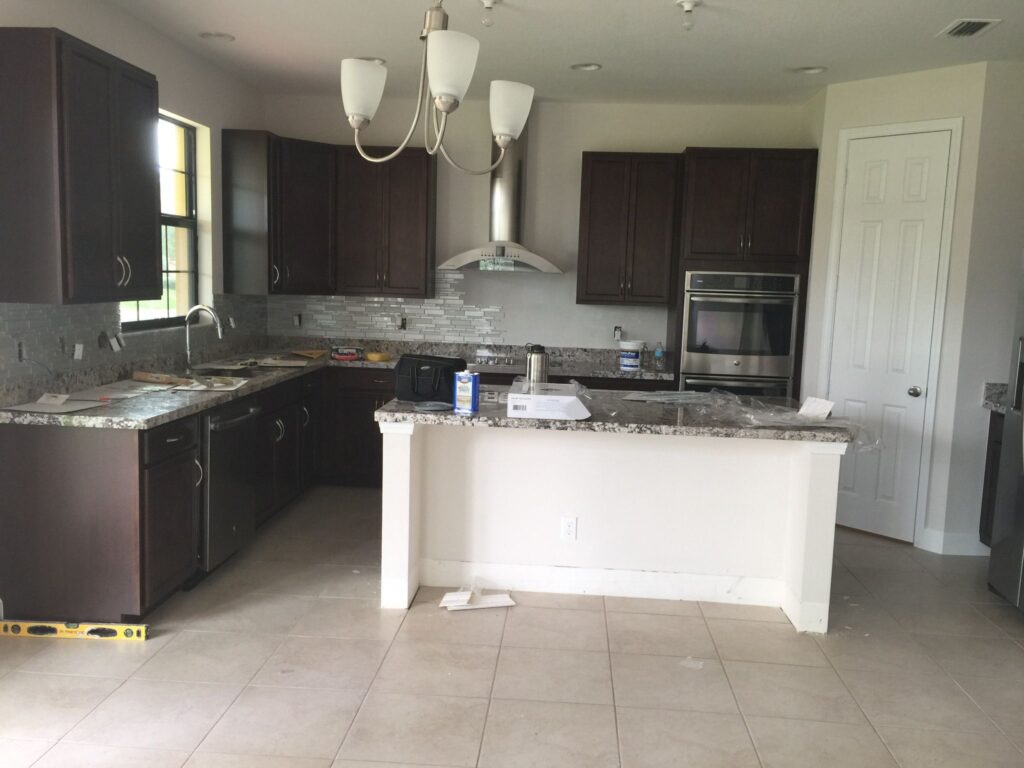
The Evolution of the “Dirty Kitchen” and Scullery Zones
A major layout trend for 2026 Austin homes is the “Kitchen-within-a-Kitchen” concept. This involves a primary “show kitchen” for entertaining and a secondary, high-performance “scullery” or “prep kitchen” for heavy cooking and cleanup. Technically, this layout requires an advanced plumbing and ventilation plan, as the scullery often houses a second dishwasher, a high-capacity sink, and specialized storage for small appliances. This allows the main kitchen to remain a clean, social hub while the technical “mess” of food preparation is contained behind a hidden door or partition.
Conclusion
The kitchen remodeling trends of 2026 represent a peak in the fusion of Texas-inspired design and modern building science. For Austin homeowners, the future of the kitchen is about creating a space that is technically superior yet aesthetically warm, balancing the demands of high-capacity appliances with the beauty of natural stone and bio-adaptive lighting. At Oak Hammer Remodel, we believe that “building it the right way” means ensuring these innovations are supported by a foundation of structural and mechanical excellence. Whether you are seeking the seamless look of panel-ready integration or the high-performance benefits of an induction-equipped scullery, your kitchen should be an engineered masterpiece that enhances your daily life and secures your home’s long-term value.
Achieving a high-performance kitchen requires a partner dedicated to technical precision. To stay informed on the latest architectural standards and local Austin trends, you can access our technical remodeling blog for professional inspiration. If your residence is ready for a precision-engineered kitchen transformation, securing expert consultation and a formal project estimate is the most effective way to ensure a seamless experience. You can review our history of excellence and client testimonials to see how we have served homes across the Austin region for years. At Oak Hammer Remodel, we offer specialized residential structural solutions and are recognized as a leading home remodeling contractor in Austin dedicated to delivering the highest standards of modern Texas craftsmanship.
FAQ
What is the “invisible kitchen” trend in 2026?
Technically, it refers to a design where appliances are hidden behind custom cabinetry panels and technology (like induction burners) is integrated beneath the countertop to create a clean, minimalist look.
Is induction cooking better than gas for Austin homes?
In 2026, induction is technically preferred for its 90% energy efficiency, precise temperature control, and the fact that it does not release indoor pollutants, which is critical for airtight, modern Austin homes.
How much does a high-end kitchen remodel cost in Austin?
For 2026, a luxury kitchen renovation in the Austin area typically ranges from $75,000 to $150,000+, depending on the structural changes, high-performance appliances, and custom stone selections.
Why is quartzite becoming more popular than quartz?
Technically, quartzite is a natural stone that offers superior heat resistance and unique veining, whereas quartz is a man-made resin-based product that can scorch if exposed to high temperatures.
What is a scullery or “prep kitchen”?
It is a secondary, functional workspace hidden from the main kitchen, technically equipped with its own plumbing and storage to handle the cleanup and heavy preparation tasks of a large household.
How does circadian lighting work in a kitchen?
It is a system that technically adjusts the color temperature of your LED lights throughout the day to match the sun, helping regulate your energy levels and sleep patterns.
What are “panel-ready” appliances?
These are appliances designed with a flat front that technically allows for the mounting of a custom cabinet door, enabling the dishwasher or refrigerator to blend perfectly with the rest of the cabinetry.
Do I need a special permit for an Austin kitchen remodel?
Yes. Any project involving electrical, plumbing, or structural changes technically requires a permit from the City of Austin to ensure compliance with 2026 safety codes.
How long does a full kitchen remodel take?
A high-performance kitchen remodeling in Austin typically takes 8 to 12 weeks, depending on the complexity of the mechanical upgrades and material lead times.
Does your company handle both design and construction?
Yes. As a local home remodeling contractor in Austin, we provide a “concept-to-completion” service that covers everything from engineering and permits to the final finishes.